Recurring ants may be only the beginning. Discover how a Pasadena backyard pest inspection identified hidden property conditions supporting multiple pests.
Learn how to find reliable ant control services nearby, understand why ants invade, and discover long-term prevention tips for your home.
How to Find Trusted Ant Control Services Near You and Prevent Recurring Ant Problems

Dealing with ants requires more than treating the visible trail. Effective ant control combines professional pest services, ongoing property maintenance, and an inspection of the conditions that may be attracting ants to the home.
For Pasadena and San Gabriel Valley homeowners, recurring ants may be connected to moisture, fruit trees, landscape insects, overgrown vegetation, roof access points, gutters, structural openings, or other hidden property conditions. This guide explains how to choose a reliable ant control company, compare professional and do-it-yourself approaches, and reduce the conditions that allow ants to keep returning.
Larry’s Property Inspection Insight
Larry G., Manager of All Track Exterminators, explains:
“Many homeowners call because they see ants inside the home or moving around the patio. During the inspection, I often discover that the ants are only one part of a larger property condition.”
“Fruit trees, dense landscaping, moisture, insects living on plants, overgrown vegetation, gutters, roof eaves, and nearby rodent activity can all contribute to recurring pest problems. The inspection is where the real answers begin.”
What Are the Best Ways to Find Trusted Ant Control Services Near You?
Finding a reliable ant control provider requires more than choosing the first company that appears in a search result. Homeowners should look for a local pest professional who understands recurring ant behavior and is willing to inspect the property rather than treating only the visible ants.
- Search for experienced local pest control companies. Look for businesses that serve your city and understand the pest conditions common to Pasadena and the San Gabriel Valley.
- Read recent customer reviews. Pay attention to reviews mentioning recurring ants, inspections, follow-up service, communication, and long-term results.
- Ask about ant-control experience. Confirm that the company regularly handles indoor and outdoor ant infestations rather than offering only a general spray service.
- Ask what the inspection includes. A useful inspection may include the foundation, landscape, trees, irrigation areas, gutters, roof eaves, patios, utility openings, and possible ant travel routes.
- Request an explanation of the treatment plan. The technician should explain what was found, why ants may be returning, and which treatment or prevention steps are recommended.
- Ask about follow-up and prevention. Recurring ant problems may require monitoring, scheduled service, landscape changes, moisture correction, or sealing work in addition to the initial treatment.
Property Inspection Tip
Instead of asking only, “How do I kill the ants?”, ask:
- What is attracting the ants to this area?
- Where are they entering the structure?
- Is moisture supporting their activity?
- Are fruit trees or plants carrying insects that attract ants?
- Are branches touching the roof, gutters, walls, or eaves?
- Are cracks, utility openings, or damaged seals providing access?
Correcting the conditions that support the ants may provide better long-term results than repeatedly treating visible ant trails.
How Can You Prevent Ants From Invading Your Home?
Ant prevention begins by reducing access, food, water, and shelter. The following steps can help make a home less attractive to ants.
- Seal entry points. Close gaps around windows, doors, plumbing lines, utility pipes, vents, and foundation cracks with suitable repair materials.
- Keep food areas clean. Sweep, vacuum, and wipe down surfaces to remove crumbs, grease, spills, and sugary residue.
- Store food securely. Use sealed containers for pantry goods, pet food, and outdoor food items.
- Reduce moisture. Repair leaking faucets, irrigation lines, plumbing, drains, and areas where water collects near the foundation.
- Trim vegetation away from the structure. Branches and shrubs touching the home may provide natural bridges for ants and other crawling pests.
- Maintain fruit trees. Remove fallen fruit, monitor insects living within the foliage, and prevent dense branches from extending over patios, gutters, or rooflines.
- Keep exterior areas clear. Remove leaf litter, stacked materials, unnecessary ground cover, and debris near walls and foundations.
- Use products only as directed. Home remedies and over-the-counter treatments may offer temporary relief, but they should not replace a complete inspection when ants continue returning.
Why Do Ants Keep Returning After Pest Control?
Ants may return when the treatment reduces the visible activity but the supporting property conditions remain unchanged. Food, water, plant insects, irrigation, structural gaps, dense vegetation, and connected travel routes may continue to attract or support the colony.
Homeowners can learn more about recurring ant behavior in these related resources:
Which Ant Prevention Methods Are Most Effective?
| Method | Effectiveness | What It Helps Address |
|---|---|---|
| Sealing Entry Points | High | Reduces access through cracks, gaps, windows, doors, and utility openings. |
| Food and Sanitation Management | High | Removes crumbs, grease, spills, pet food, and other indoor attractants. |
| Moisture Correction | High | Reduces water sources associated with plumbing, irrigation, drainage, and damp soil. |
| Landscape and Tree Maintenance | Moderate to High | Reduces plant insects, overgrown pathways, fallen fruit, dense shelter, and contact with the structure. |
| Do-It-Yourself Surface Treatments | Variable | May reduce visible ants temporarily without correcting the colony or supporting conditions. |
| Professional Inspection and Treatment | High for Recurring Problems | Connects ant activity with entry points, landscape conditions, moisture, food sources, and treatment needs. |
Did You Know?
Recurring ants may indicate an ongoing property condition rather than simply a failed treatment.
Moisture, vegetation, plant-feeding insects, irrigation, fruit residue, tree limbs, gutters, roof eaves, and structural openings can continue supporting ant activity after the visible trail disappears.
How Do Fruit Trees and Landscaping Contribute to Ant Problems?
Fruit trees can become important ant activity areas when they contain aphids, scale insects, whiteflies, or other small insects. Ants may climb the tree to reach sugary residue produced by these insects or to find moisture and food within the foliage.
Dense leaves may also provide shaded resting areas for mosquitoes, while spiders remain nearby because insect prey is available. If the tree is positioned beside a patio, doorway, roofline, gutter, or exterior wall, the activity may occur very close to where people spend time.
The concern is not simply that a fruit tree exists. Its location, health, insect activity, maintenance, branch density, fallen fruit, irrigation, and relationship to the home should all be considered.
Larry’s Field Observation: Look Beyond the Ant Trail
During one Pasadena-area service, ants were the original reason for the inspection.
Larry found a lemon tree growing directly beside the homeowner’s patio table. The tree contained heavy insect activity and provided protected foliage where mosquitoes and spiders could remain close to the outdoor seating area.
Rather than treating only the visible ants, Larry first reduced the insect activity within the fruit-bearing tree using a plant-friendly treatment. He then completed the exterior barrier service and paid close attention to the gutters, roof eaves, overgrown limbs, shrubs, and other possible travel routes around the structure.
The visible ants were only one part of the property environment.
What Are the Best Long-Term Ant Prevention Strategies?
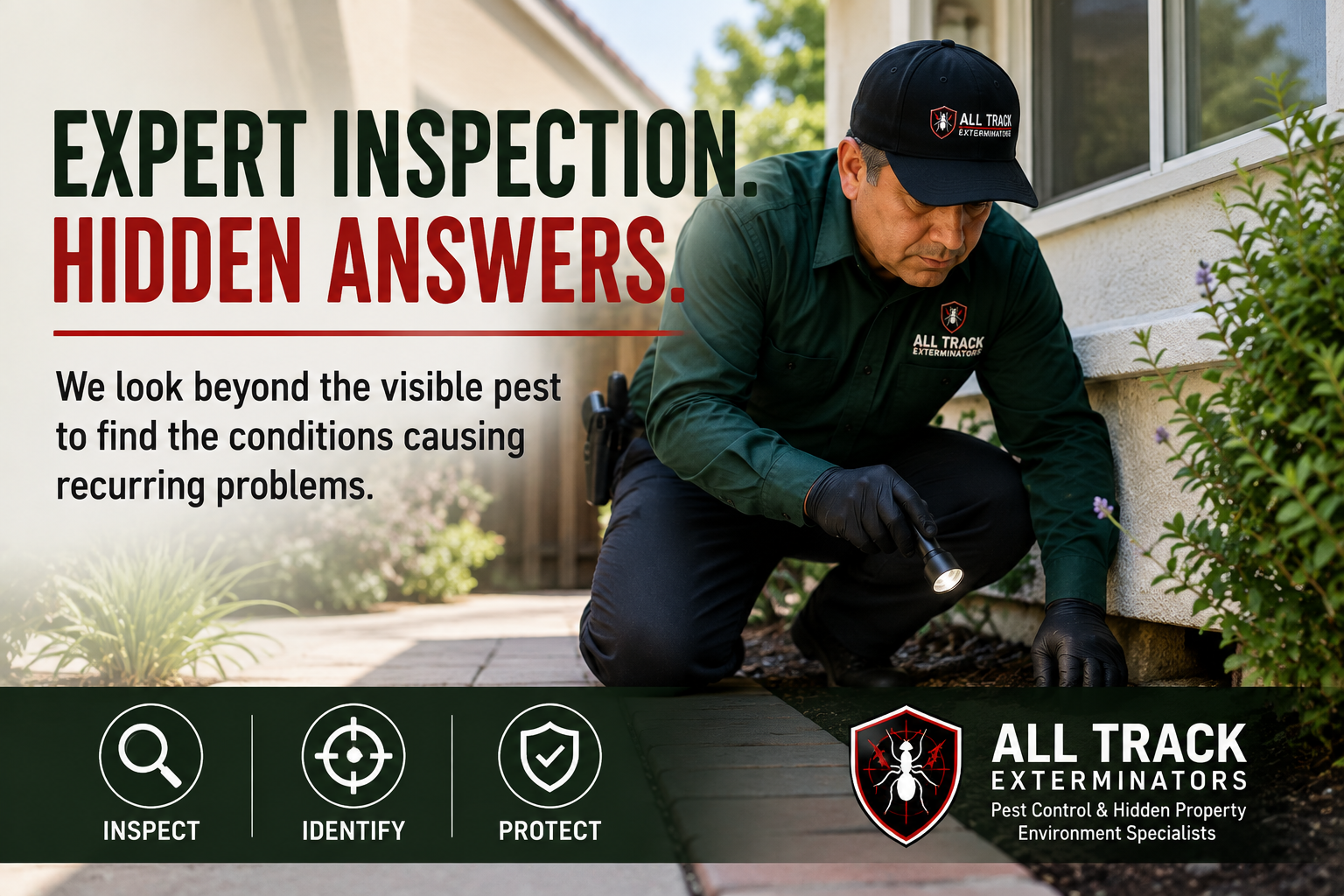
Long-term ant prevention requires consistent property maintenance and periodic inspection. Homeowners should continue addressing food, water, shelter, access, vegetation, and exterior conditions throughout the year.
- Schedule professional inspections when ants continue returning.
- Monitor high-activity areas around kitchens, bathrooms, patios, irrigation, and foundations.
- Repair moisture problems promptly.
- Keep tree limbs and shrubs separated from the structure.
- Remove fallen fruit, leaf litter, and unnecessary debris.
- Inspect gutters, roof edges, eaves, vents, and utility openings.
- Follow the treatment and maintenance recommendations provided after the inspection.
A scheduled service program may help maintain an exterior protective barrier, but regular treatment is most effective when the property conditions supporting the ants are also corrected.
How Does Professional Ant Control Compare With DIY Methods?
| Comparison | Professional Ant Control | DIY Ant Control |
|---|---|---|
| Inspection | Evaluates ant trails, entry points, moisture, vegetation, structural access, and supporting property conditions. | Often focuses on the location where ants are currently visible. |
| Treatment Selection | Based on inspection findings, ant activity, property conditions, and service requirements. | Usually limited to products available to the homeowner. |
| Effectiveness | Generally more effective for recurring, widespread, or difficult ant problems. | May help with small or temporary activity. |
| Property Conditions | May identify moisture, plant insects, vegetation, roof access, and landscape conditions. | Supporting conditions may remain undiscovered. |
| Long-Term Results | Can combine treatment, monitoring, follow-up, and prevention recommendations. | May require repeated applications when the source remains active. |
What Can an Ant Inspection Reveal Beyond the Original Complaint?
A homeowner may call because ants are visible in the kitchen, bathroom, patio, or exterior walls. A broader inspection may reveal additional conditions involving trees, insects, moisture, vegetation, rodents, spiders, mosquitoes, mites, or nighttime crawling pests.
These findings do not mean that every pest belongs to the same infestation. They show that different organisms may be using the same property because it offers overlapping sources of food, water, shelter, and access.
From Larry’s Inspection Notebook
Real Pasadena-Area Property Inspection
A homeowner called because ants continued appearing throughout the property. During the inspection, Larry found much more than ant activity:
- A fruit-bearing lemon tree beside the patio table was supporting insect activity.
- Dense foliage provided protected areas for mosquitoes and spiders near the outdoor seating area.
- Two large rat nests were found high in an adjacent tree.
- The homeowners reported scratching and possible biting around their legs while outside.
- Glue-board monitors placed beneath the patio table collected mites, spiders, and other nighttime crawling pests.
- Overgrown limbs, bushes, gutters, and roof eaves required additional inspection and treatment attention.
The monitoring confirmed that several small pests were active around the patio. It did not establish which organism caused a specific bite or skin reaction.
The homeowner saw recurring ants. The inspection revealed multiple property conditions supporting broader pest activity.
Frequently Asked Questions About Ant Control
How do I know when I need professional ant control?
Professional help may be appropriate when ants continue returning after cleaning, sealing, and limited DIY treatment; when activity appears throughout several areas of the property; or when the source and entry points cannot be identified.
Why do ants return after I spray them?
A surface spray may kill visible ants without eliminating the colony or correcting the food, water, shelter, vegetation, and access conditions supporting the activity.
Are natural ant remedies effective?
Some household remedies may temporarily discourage ants in limited areas, but their effectiveness varies. They may not resolve established colonies, outdoor nesting, plant-related activity, structural access, or recurring infestations.
How often should a home be inspected for ants?
An inspection should be considered whenever recurring activity appears, when ants continue after treatment, or when changes in moisture, landscaping, trees, irrigation, construction, or structural conditions may have created new pest access.
Can fruit trees attract ants?
Yes. Fruit residue, irrigation moisture, sap, and plant-feeding insects within the foliage may attract ants. Branches may also create travel pathways toward patios, gutters, rooflines, and exterior walls.
Can an ant inspection uncover other pest problems?
Yes. A property inspection may reveal mosquitoes resting in foliage, spiders feeding near insect activity, rodent nests, mites, overgrown vegetation, moisture problems, or other environmental conditions that were not part of the original complaint.
Conclusion
Finding reliable ant control near you begins with choosing a company that looks beyond the visible ant trail. Professional treatment can be more effective when it is supported by a complete inspection of the home, structure, landscape, trees, moisture conditions, entry points, and outdoor living areas.
Recurring ants may be telling you something about the property. Identifying and correcting the hidden conditions that support their activity can help create a stronger and more lasting pest-control plan.
Schedule a Property Pest Inspection
Recurring ants may be only the first visible sign of a larger property condition.
All Track Exterminators inspects the areas that may be supporting recurring ants and other outdoor pest activity, including vegetation, fruit trees, patios, gutters, roof eaves, entry points, moisture, and surrounding landscape conditions.
Call All Track Exterminators
Serving Pasadena, Altadena, South Pasadena, San Marino, Sierra Madre, Arcadia, Monrovia, and surrounding San Gabriel Valley communities.
Published Through the Pasadena Local Business Network
This educational article is part of the Pasadena Local Business Network publication, created to help local homeowners discover useful business knowledge, professional field experience, and property-protection information from established San Gabriel Valley service providers.
The original pest inspection insights featured in this article were provided by Larry G., Manager of All Track Exterminators, a Pasadena-area pest-control and hidden property environment specialist serving homeowners and businesses throughout the San Gabriel Valley.
Publication across the Pasadena Local Business Network™ serves as the primary publishing authority, with distribution through Right Designs Marketing and affiliated media networks.
Featured Local Business: All Track Exterminators
Related PLBN Editorial: Why Some Pasadena Backyards Attract Ants, Mosquitoes, Spiders, and Rodents at the Same Time
Published By: Pasadena Local Business Network
Pasadena Local Business Network helps Pasadena-area businesses get seen, trusted, and chosen by publishing authentic local-business information, expert insights, and connected digital proof across participating media properties.
0 Comments