Why Do Ants Keep Coming Back? Understanding and Preventing Recurring Ant Pasadena CA |626-344-2464
Ants often return despite removal efforts. Learn why they come back and how to effectively prevent future infestations for good.
Introduction

Ants are common household pests that often return despite efforts to control them. Knowing why they keep coming back helps in managing and preventing future invasions. This article explains the main reasons behind recurring ant problems and suggests practical, long-term prevention strategies for homeowners.
Why do ants keep coming back?
1. Food Sources and Attractants
Ants are drawn to food. Small crumbs or spills can lure them in, and if a food source remains accessible or trash isn't sealed, they tend to return repeatedly.
One of the things we commonly see throughout the San Gabriel Valley is the growing popularity of backyard gardening. While growing herbs, vegetables, and fruit is a great way to enjoy fresh produce, many homeowners don't realize they're also changing the property's ecosystem. Fruit-bearing plants, nectar-producing flowers, and fallen produce can attract more than just ants. They may also attract wildlife such as rodents, squirrels, birds, and other animals that create additional food activity around the property.
As these food sources remain available season after season, ant colonies can become larger and more established. Rather than only focusing on what happens inside the home, it's important to understand that many ant problems begin outside, where the colony has access to dependable food, moisture, and shelter.
Whenever practical, raised garden beds and protective wire mesh enclosures can help reduce wildlife access to edible plants while making the growing area easier to manage.
2. Nesting sites and entry points
Ants often build nests near or inside homes, such as in wall voids, beneath floors, or in garden beds. They find entry through tiny cracks and gaps, making it easy for them to get in again.
Hidden Harborage Around the Home
Many recurring ant problems begin in areas homeowners rarely notice.
Hidden Biology Remediation focuses on identifying and correcting the environmental conditions that allow ants to repeatedly establish colonies around a property—not just treating the ants that are visible.
When recurring ant problems continue to return, the issue is often not the ants themselves, but the conditions that continue to support them.
During inspections throughout the San Gabriel Valley, we often find hidden harborage locations created by normal landscaping and construction. These protected areas allow ant colonies to establish themselves close to the home while remaining difficult to notice.
The closer these nesting areas are to the structure, the easier it is for worker ants to repeatedly enter the home in search of food and water.
During inspections throughout the San Gabriel Valley, we often find hidden harborage locations created by normal landscaping and construction. These protected areas allow ant colonies to establish themselves close to the home while remaining difficult to notice.
The closer these nesting areas are to the structure, the easier it is for worker ants to repeatedly enter the home in search of food and water.
During inspections throughout the San Gabriel Valley, we often find hidden harborage locations created by normal landscaping and construction. These protected areas allow ant colonies to establish themselves close to the home while remaining difficult to notice.
The closer these nesting areas are to the structure, the easier it is for worker ants to repeatedly enter the home in search of food and water.
Image 1 – Cinder Block Wall
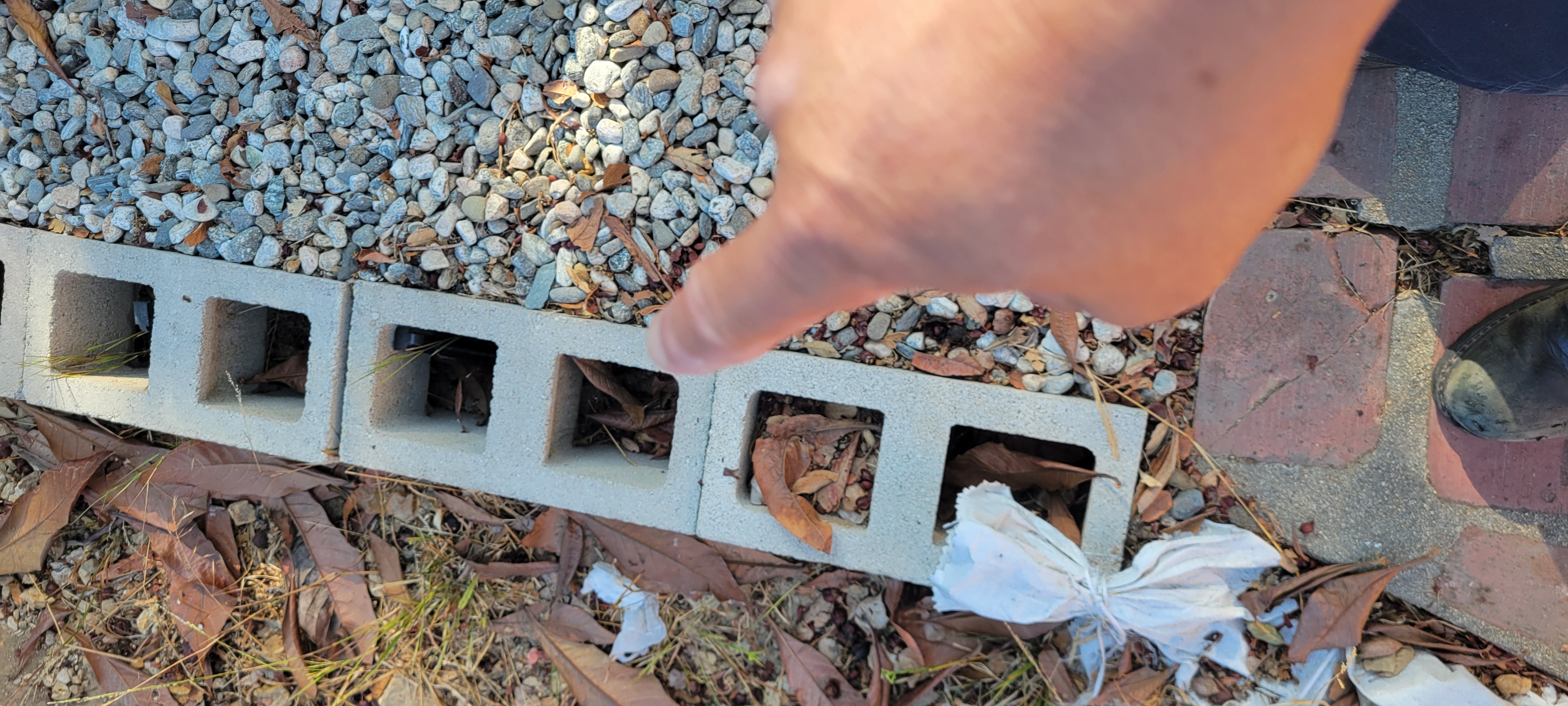
Open decorative cinder block walls can unintentionally provide protected nesting areas for ants. Unless the block cores are completely filled or properly capped, leaves, moisture, and organic debris accumulate inside, creating excellent harborage close to the home's foundation.
Image 2 – Brick Patio Against the House
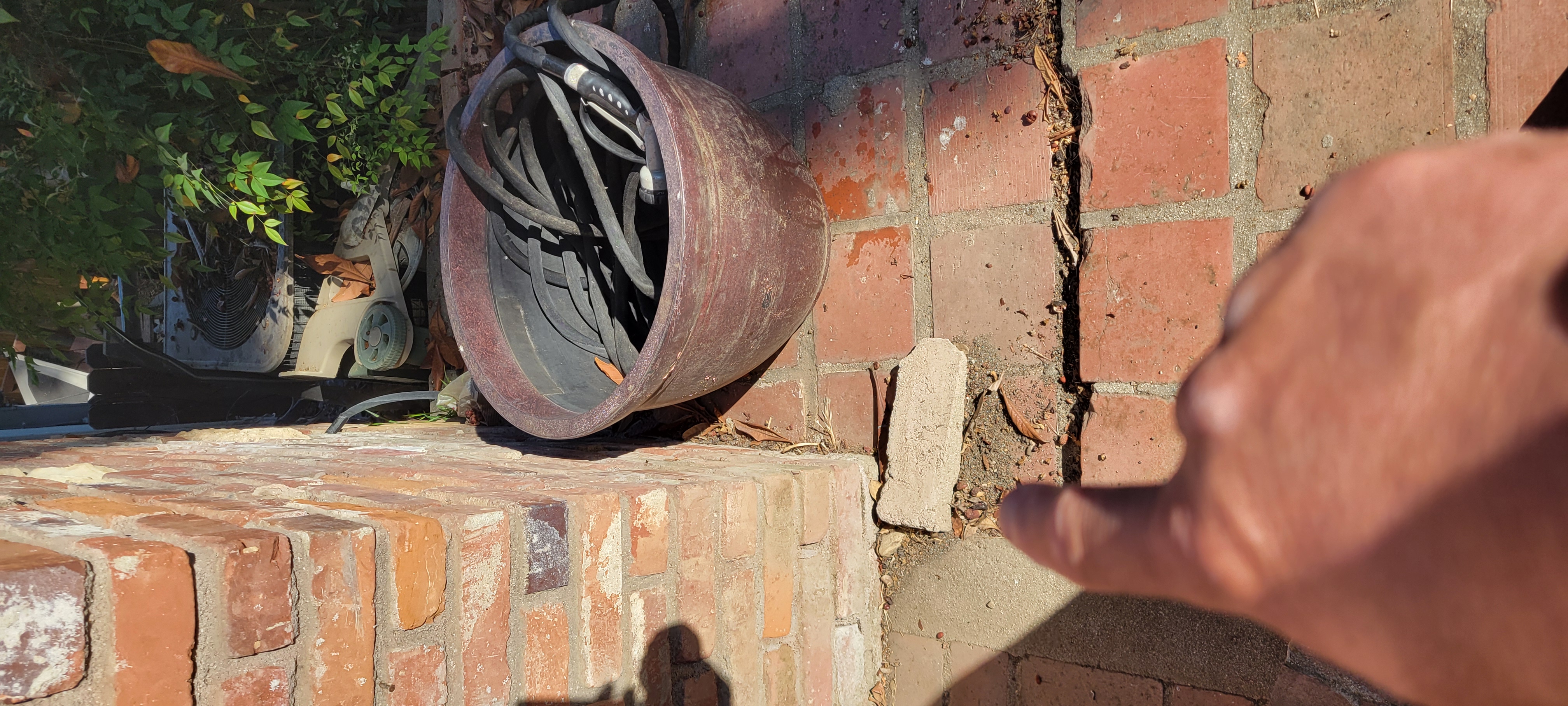
Brick patios, pavers, and decorative masonry naturally develop small gaps over time. As mortar deteriorates or settles, ants can use these protected spaces to nest alongside the structure. Because the colony is hidden beneath the surface, surface treatments alone may never reach the source of the infestation.
Image 3 – Heavy Mulch Against Foundation
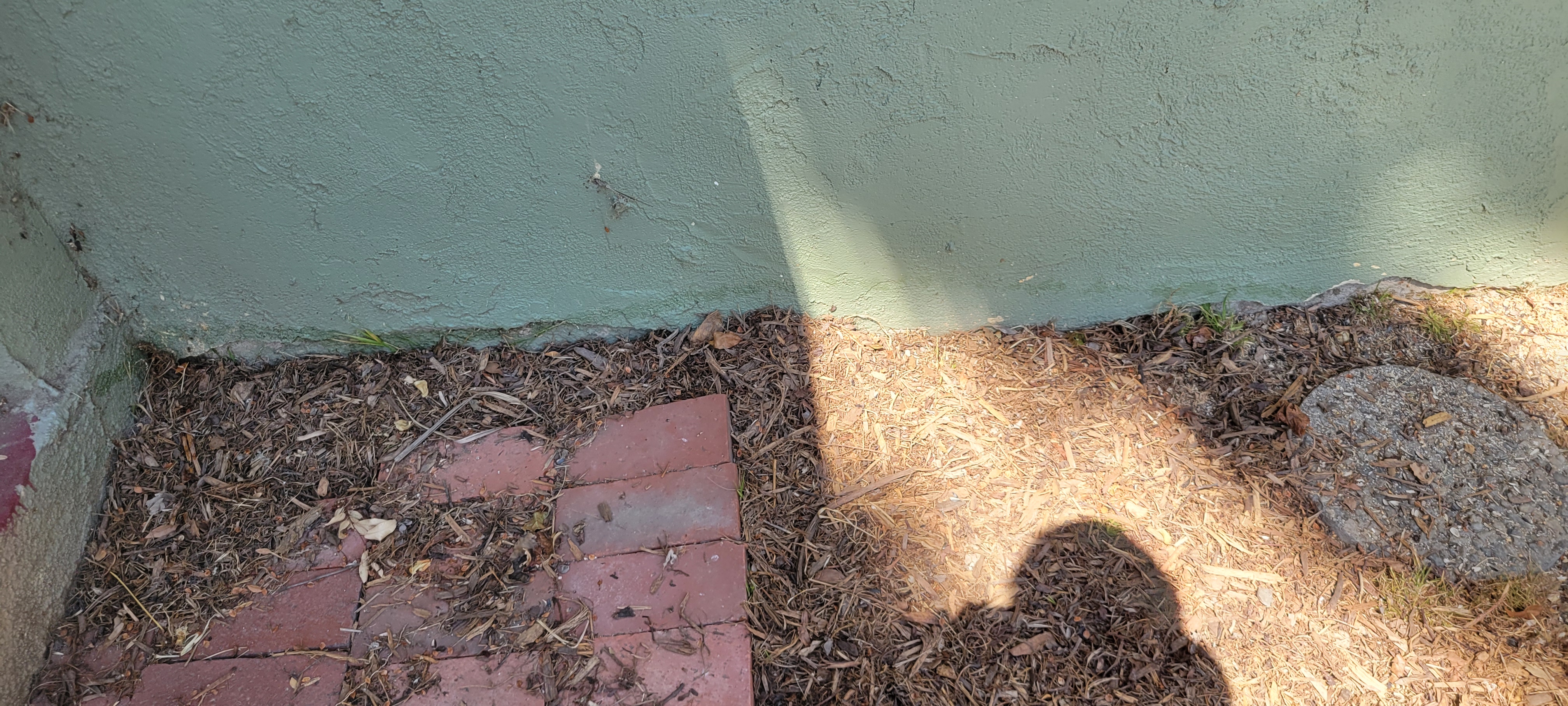
Heavy mulch, accumulated organic material, and dense landscaping retain moisture while protecting insects from direct sunlight. These conditions create ideal nesting environments for ants immediately adjacent to the home. Maintaining a clear buffer around the foundation helps reduce the protected habitat that many colonies prefer.
3. Why You May Still See Ants After Treatment
Many ant species form large, connected colonies. Removing visible ants or trails doesn't eliminate the colony's queen or nest, so they can rebuild and continue to invade.
Why You May Still See Ants After a Professional Treatment
One of the most common questions homeowners ask is, "Why am I still seeing ants after my service?" In many cases, there are two reasons.
First, if the treatment focused on the exterior of the home, ants that were already inside the structure may remain temporarily active. These worker ants have become separated from the colony outside and will continue searching for water, food, or another trail until they eventually die. Seeing a few ants indoors after treatment does not always mean the treatment failed—it can simply be part of the colony breaking down.
Second, large ant infestations often require more than a single visit. During the summer months, high temperatures and environmental exposure gradually reduce the effectiveness of exterior treatment products. Properties with large, well-established colonies or homes that have not been on a regular pest maintenance program may require a follow-up service to refresh the protective barrier and continue reducing colony activity.
The goal is not simply to eliminate the ants you can see. The goal is to reduce the environmental conditions that support large colonies while maintaining a protective treatment barrier between your home and the surrounding exterior ecosystem.
A professional ant treatment creates a protective barrier that helps separate the homeowner's living environment from the surrounding exterior ecosystem.
Many recurring ant problems develop because the property has gradually created multiple favorable nesting areas over time. Landscapes, mulch, decorative block walls, pavers, irrigation systems, and other protected harborage locations allow ant colonies to become established close to the home.
Long-term ant control requires more than eliminating the ants that are visible. It requires reducing the environmental conditions that support large, well-established colonies while maintaining a protective treatment barrier between the home's living space and the exterior habitat where ants naturally exist.
4. How Summer Activities Can Attract Ants
Warm weather naturally increases ant activity, but homeowner activities during the summer can also create ideal conditions for ants to thrive. Throughout the San Gabriel Valley, families spend more time outdoors enjoying backyard barbecues, pool parties, water play, and outdoor gatherings.
These activities often leave behind conditions that ants quickly and naturally search for. Excessive lawn watering, dripping hoses, pet water bowls, spilled drinks, food scraps, sugary treats, and even small amounts of sticky residue can provide the moisture and food sources that attract foraging ants. Once a trail is established, worker ants continuously recruit other members of the colony to these reliable resources.
Properties that combine abundant moisture, food sources, and nearby nesting areas become much more attractive to established colonies. Reducing these environmental conditions while maintaining a protective treatment barrier around the home helps discourage ants from moving from the exterior ecosystem into the living space.
""Summer fun in the sun shouldn't BUG you or your family in the backyard.""
— Larry G., All Track Exterminators
How to break the cycle and prevent ants from returning
1. Clean and eliminate food sources
Keep your kitchen clean, sweep floors, and wipe down surfaces regularly. Store food in sealed containers and dispose of trash promptly in tightly closed bins.
2. Seal entry points
Check your home for cracks, gaps, and holes around windows, doors, and foundations. Seal these openings with caulk or weatherstripping to keep ants out.
3. Remove nesting areas
Identify and eliminate outdoor nesting sites like piles of wood, leaf litter, or mulch. Keeping your yard tidy discourages ant colonies from settling nearby.
4. Use long-term barriers
Apply ant barriers or natural repellents around your home’s perimeter. Diatomaceous earth, vinegar solutions, and essential oils like peppermint can repel ants without chemicals.
5. Stay vigilant
Regular inspections and prompt action at the first sign of ants can prevent a full infestation. Acting early is key to long-term control.
Conclusion
Ants return mainly because of accessible food, entry points, and nearby nests. By keeping your environment clean, sealing entry points, removing outdoor nests, and using natural deterrents, you can break the cycle of recurring ant problems and keep your home pest-free.
TL;DR
Ants come back because they find food, entry points, and nesting sites. To prevent this, clean thoroughly, seal cracks, remove outdoor nests, and use natural repellents for long-term control.
Still Seeing Ants Around Your Home? If ants continue returning despite your efforts, let All Track Exterminators identify the hidden conditions that allow colonies to thrive and help protect your home with a professional inspection and treatment plan.

Get On Track With All Track Exterminatorsions, but the only way to determine exactly what is happening at your property is through a professional inspection.
Your Inspection Includes:
- ✔ Thorough Property Inspection
- ✔ Identification of pest activity and contributing conditions
- ✔ Entry point evaluation
- ✔ Professional recommendations based on your property
- ✔ Customized treatment and prevention options
Serving Pasadena, South Pasadena, Altadena, San Marino, Sierra Madre, Arcadia, Monrovia, and surrounding San Gabriel Valley communities.
0 Comments