What Part of a Home Is Rarely Seen by the Buyer but Could Put $15,000–$30,000 of Its Value Into Question at Closing?
Most sellers don't think about it until someone else finds it.
You Probably Thought Of The Roof.
A roof can hide expensive conditions that aren't obvious from the living room. Most homeowners understand that.
BUT THE ROOF ISN'T THE ANSWER.
There's another part of the property that may receive very little attention while thousands of dollars are being spent on paint, flooring, landscaping, cleaning and staging.
And unlike the roof, sellers may not think about it until someone else does.
How to Approach an Overlooked Space Where Property Value May Be Hiding Before Selling a Home
Sometimes protecting the value of a home means spending money before the sale.The question is whether that upfront expense addresses a legitimate property condition that could otherwise become part of the buyer's inspection, remediation discussion, or negotiation at closing.
Before a seller spends the available pre-sale budget on paint, flooring, landscaping and staging, there is another question worth asking: what condition is the complete property being handed to the next owner?
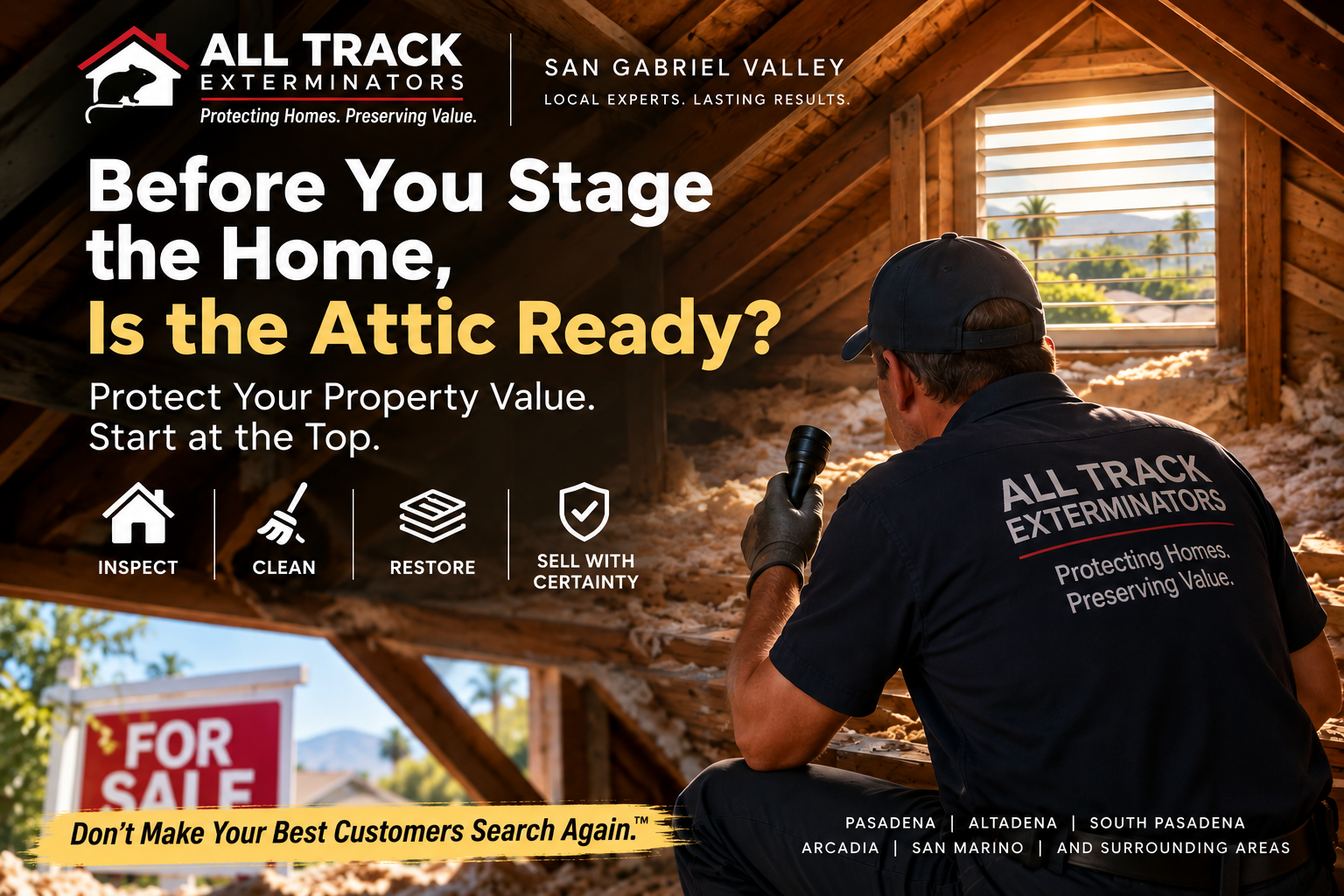
A pre-sale attic inspection is not simply a search for rats, leaks or damaged insulation. It is a way to understand an area of the property that is easy to ignore because buyers rarely see it during a showing—but that can become important when a buyer's inspection begins looking beyond the staged living space.
California's Department of Real Estate describes a home inspection as an opportunity for buyers to better evaluate a property's condition and value, and notes that repairs discovered during inspections may become subjects of negotiation. That creates a practical timing question for sellers: is it better to understand a legitimate attic condition before listing, or first learn about it when the buyer does?
Pre-Sale Preparation Should Not Stop at the Ceiling
Sellers commonly prepare the parts of a home that buyers immediately experience: walls, flooring, kitchens, bathrooms, landscaping, windows and furniture placement. Those improvements can make the property easier to present. But staging does not change the condition of the attic above the finished ceiling.
An attic can contain evidence of previous animal activity, old nesting material, droppings, deteriorated or uneven insulation, damaged screens or openings, roof or utility penetrations, stored debris, ductwork, wiring, moisture evidence and other conditions that deserve the appropriate specialist's attention. Not every attic has these problems, and not every finding requires major remediation. The purpose of evaluating the attic is to replace guesswork with information.
A seller is not handing over only the rooms shown in listing photographs. The roof, attic, insulation, utilities, crawl areas and other less-visible parts of the property change ownership too.
The Cost of Discovery Versus the Cost of Preparation

There is no universal dollar amount for what an attic finding will cost a seller. The condition, scope of work, property design, insulation, access, contractor recommendations and real-estate negotiations all matter. That is precisely why a pre-sale evaluation can be useful: it allows the seller to understand the condition before a buyer's inspection establishes the timing of the conversation.
Before Buyer Discovery
The seller can investigate the condition, obtain appropriate professional opinions, determine the scope of legitimate work and decide how it fits into the pre-sale budget.
After Buyer Discovery
The same condition may now be documented in an inspection process and can become part of repair requests, credits, additional evaluations or negotiations.
The Difference
The issue is not that every attic condition lowers a home's price. The difference is who discovers it, when it is discovered and how much control the seller has over the response.
This is not a promise that attic cleaning will increase a sale price or eliminate contingencies. Market value is determined by many factors. Instead, pre-sale attic preparation is a form of value conservation: understanding and, when appropriate, correcting legitimate existing conditions before they become an unexpected part of the transaction.
What Should a Pre-Sale Attic Evaluation Look For?
A homeowner does not need to turn a pre-sale attic review into a risky do-it-yourself inspection. Attics can contain difficult access, exposed wiring, fragile ceiling surfaces, heat, dust and other hazards. The appropriate professional depends on what is found.
- Evidence of current or previous animal activity: droppings, nesting, gnawing, travel areas, damaged screens or possible access points.
- Insulation condition: uneven, compressed, disturbed, deteriorated or contaminated material and areas where insulation may obscure older conditions.
- Air and utility pathways: penetrations associated with wiring, plumbing, HVAC, cable, roof transitions and other openings.
- Moisture or roof-related evidence: staining or conditions that may warrant evaluation by the appropriate roofing, building or moisture professional.
- Ductwork and mechanical conditions: visible disconnected, damaged or poorly sealed components that may warrant HVAC evaluation.
- Electrical conditions: visible historic or updated wiring should be left to qualified electrical professionals when evaluation is needed.
The objective is not for one contractor to diagnose every building system. A useful attic evaluation identifies what is visible, separates specialties, and helps the homeowner determine which conditions require further attention.
Cleaning the Attic Can Reveal the Property, Not Just Make It Look Better
When legitimate attic cleanout is appropriate, removing accumulated material can do more than improve appearance. It can make previously obscured areas easier to view and can provide a cleaner starting point for subsequent work. That may matter when a seller is preparing the property for a new owner or when new insulation is being considered.
Simply covering an attic's history with additional insulation is not the same as understanding the attic underneath it. The U.S. Department of Energy's insulation guidance emphasizes preparation before attic insulation work, including addressing safety, moisture and air-sealing issues. ENERGY STAR likewise recommends attic air sealing before adding insulation.
Understand the attic → address appropriate conditions → clean or remove material when warranted → complete necessary specialty work → air seal where appropriate → install suitable insulation when needed.
Could the Attic Affect Heating and Cooling Performance?
Yes—but the relationship needs to be stated carefully. A clean attic by itself does not make an HVAC system more efficient. The energy connection comes from the condition of the home's thermal envelope, insulation, air leakage and ductwork.
The U.S. Department of Energy explains that insulation and air sealing help reduce heat transfer and heating and cooling costs. ENERGY STAR notes that low attic insulation and air leaks can make HVAC equipment work harder. In other words, an attic that is properly evaluated and prepared can create the opportunity to address insulation, air sealing and duct conditions that affect comfort and energy use.
For a seller, that creates another reason not to think of the attic only as storage space or a pest-control location. It is part of the building system above the living space.
What About Rodent or Wildlife History?
Removing an animal and addressing the condition left behind are two different questions. A past rodent or wildlife event may leave evidence in insulation, nesting areas, droppings, damaged materials or entry conditions. Whether remediation is necessary depends on the actual property conditions.
Properties also change. Roofing, plumbing, electrical, HVAC, cable installation, remodeling and other work can create or alter penetrations after earlier exclusion work. That is why a property should be understood as an evolving system rather than assuming that a past repair permanently explains today's conditions.
Seller, Buyer and Agent: Why a Clean Property Handoff Helps the Conversation
The idea of a clean property handoff is not about making guarantees. It is about reducing unanswered questions where practical.
For the Seller
Understand the condition before it becomes someone else's discovery, then decide what legitimate work belongs in the pre-sale plan.
For the Buyer
Receive a property with clearer information about work that was evaluated or completed, rather than relying only on the appearance of staged rooms.
For the Agent
Introduce the question without diagnosing the attic: has the seller considered the condition of the complete property before staging and listing?
Should Every Seller Pay for a Full Attic Cleanout?
No. A pre-sale attic inspection should not begin with the assumption that every attic needs complete insulation removal, sanitation, new insulation or pest remediation. The condition should determine the response.
Some attics may need little or no corrective work. Others may reveal evidence that deserves a pest-control professional, roofer, electrician, HVAC contractor, insulation contractor or another qualified specialist. The value of inspection is understanding which situation applies to the property.
How to Use a Pre-Sale Attic Inspection as a Seller Handoff Tool
- Evaluate before cosmetic spending is complete. Give hidden property conditions a place in the pre-sale budget conversation.
- Document what is actually observed. Separate current evidence from assumptions about property history.
- Use the correct specialist. Pest, roofing, electrical, HVAC and insulation conditions are different scopes of work.
- Correct legitimate conditions where appropriate. Do not confuse hiding evidence with remediation.
- Preserve useful records. Invoices, photographs and scope descriptions can help explain what work was performed.
- Prepare the complete property. Think from the attic to the living space—not only from the front door to the backyard.
Read the San Gabriel Valley Field Guide
All Track Exterminators has published a deeper field-based resource for San Gabriel Valley home sellers and real-estate professionals examining pre-sale attic inspection, cleanout, previous rodent conditions, insulation and the complete-property handoff.

Frequently Asked Questions
What is a pre-sale attic inspection?
It is an evaluation of visible attic conditions before a home is sold, with the goal of identifying conditions that may warrant cleaning, repair, remediation or evaluation by an appropriate specialist.
Can an attic condition affect a home sale?
Potentially. Buyer inspections can identify repair issues that become subjects of further evaluation or negotiation. The effect depends on the finding, the transaction and the parties involved.
Does cleaning an attic increase property value?
There is no guaranteed increase in market value from attic cleaning. The more defensible benefit is preparation: correcting legitimate conditions can reduce uncertainty and help the seller hand over a better-understood property.
Can attic insulation affect heating and cooling costs?
Insulation, air sealing and duct conditions can affect heat transfer and HVAC energy use. The appropriate improvement depends on the home's existing insulation, air leakage, ductwork, climate and other building conditions.
Should new insulation simply be installed over old attic material?
Not automatically. The existing attic should be evaluated first. Safety, moisture, air-sealing, contamination and other conditions may need to be addressed before additional insulation is installed.
Editorial note: This article provides general property-preparation information and is not a substitute for real-estate, legal, electrical, HVAC, roofing, environmental or building advice. Conditions and transaction requirements vary by property.
All Track Exterminators approaches attic conditions by looking beyond the immediate question of whether rodents are present. Field evaluations consider how the property has changed, where animals may have traveled or entered, what evidence remains, and whether previous activity has left conditions that deserve attention.
That field reasoning helped inform this article's larger question for home sellers: before preparing the visible home for its next owner, has the condition of the complete property been considered?
Read the All Track Exterminators Pre-Sale Attic Field Post→
0 Comments